
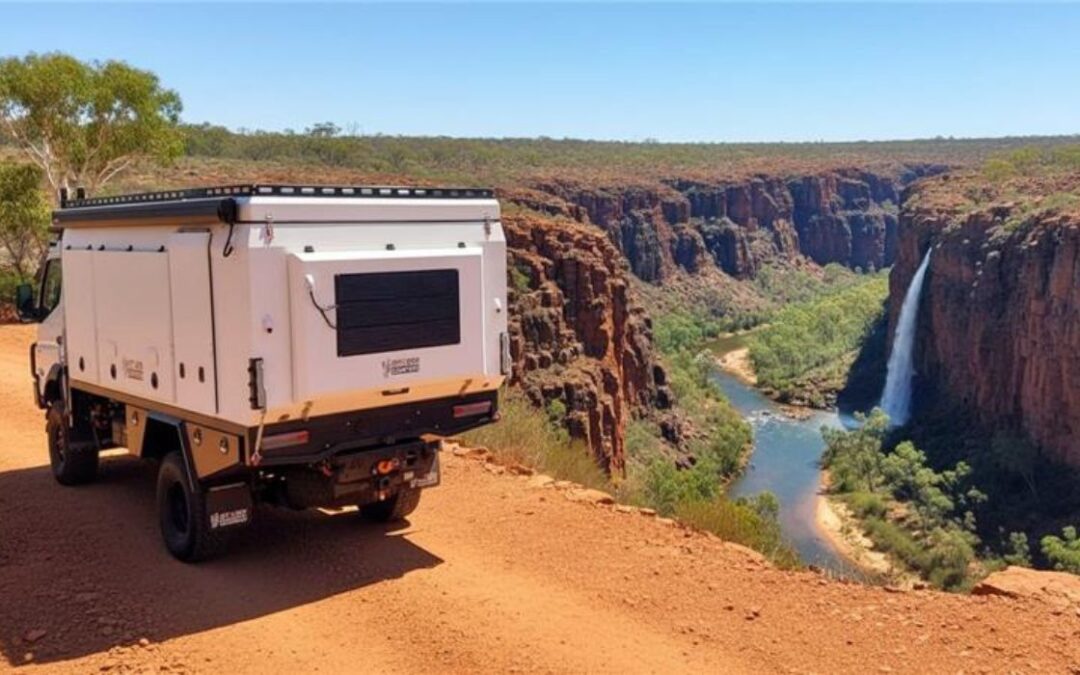
Australia rewards travellers who are willing to go beyond established campgrounds. Remote roads, quiet beaches, outback tracks, and bush camps offer experiences that are hard to reach with a conventional camping setup.
A single cab truck camper give you a practical way to travel further while keeping your essential comforts close. Mounted directly onto the truck tray, it combines accommodation, storage, cooking, power, and water in one mobile setup. For extended Australian travel, that means less dependence on powered campsites and more freedom to choose where you stay.
Built for the Road Less Travelled
Remote Australian travel puts more demands on your vehicle and camping equipment. You may encounter corrugated roads, gravel tracks, heat, dust, changing weather, and long distances between facilities.
A suitable camper needs to handle these conditions while remaining comfortable inside. The truck itself also needs the right payload, suspension, tyres, and tray setup for the complete load.
This is where a truck-based camping system has an advantage. A properly configured truck can carry a larger camper and its essential systems without requiring a separate trailer.
One Truck, One Complete Basecamp
A slide-on camper turns the truck tray into a complete living platform. Instead of towing accommodation behind you, your sleeping, cooking, storage, and living facilities travel with the vehicle.
A single cab truck slide on camper can include many of the facilities normally associated with larger camping setups. These can include a proper bed, kitchen, fridge, water storage, bathroom, heating, cooling, and dedicated storage.
The result is a compact basecamp that can travel with you to remote locations and set up without the space requirements of a caravan.
Stay Independent When the Grid Ends
Off-grid travel depends on two essentials: power and water.
A capable electrical system can combine rooftop solar, batteries, DC/DC charging, and an inverter. Together, these components can provide power for refrigeration, lighting, cooking, water pumps, electronics, and climate-control equipment.
Solar capacity becomes especially useful during longer stays away from powered sites. Battery storage then holds that energy for use when sunlight is limited.
Water is just as important. A larger freshwater tank can support drinking, cooking, cleaning, and showers for longer periods. For remote travel, this reduces the need to regularly search for facilities or refill points.
Comfort Has a Place in the Outback
Going remote does not mean living without basic comforts.
A well-equipped truck camper in Australia can provide a proper sleeping area, kitchen, dining space, bathroom, and climate control within a relatively compact footprint.
A Single-Cab Truck Slide-On Camper usually includes a King bed, internal lounge, kitchen facilities, ensuite, air conditioning, diesel heating, and hot water. It also provides 260 litres of freshwater capacity for longer periods away from established facilities. After a full day on the road, having somewhere comfortable to sleep, shower, cook, and escape extreme temperatures can make a major difference.
Made to Move with You
The slide-on format is one of the biggest advantages of truck-based camping.
Because the camper sits on the truck tray, there is no trailer to tow behind the vehicle. This can make manoeuvring simpler on narrow roads and at smaller campsites. You also avoid the need to reverse a separate caravan into a camping spot.
Many modern slide-on campers use electric lift systems to make setup and removal more manageable. Once the truck and camper are correctly prepared, these systems can simplify the process of positioning the camper and getting your campsite ready.
For travellers who want mobility without towing, slide on campers in Australia offer a practical alternative.
Ready for More Than Sealed Roads
A camper designed for Australian travel needs more than a comfortable interior. The complete setup needs to cope with vibration, uneven surfaces, dust, and changing terrain.
The camper’s construction and mounting system are important, but so are the truck’s suspension, tyres, tray, brakes, and load capacity.
Weight distribution also matters. A poorly matched setup can affect handling and vehicle stability. Off-road capability therefore depends on the complete truck and camper combination, not simply the camper itself.
Before travelling on difficult tracks, make sure the vehicle is properly configured for its intended load and terrain.
Make Every Kilogram Count
Camper weight is only one part of the equation.
The final travelling load can also include:
- Freshwater
- Fuel
- Passengers
- Food
- Recovery equipment
- Camping gear
- Spare tyres
- Accessories
- Tray and mounting equipment
A camper may have a stated dry or tare weight, but the loaded vehicle will weigh considerably more.
Payload, GVM, axle loads, suspension capacity, and tray ratings should all be considered before fitting a camper. For example, OTG’s Single-Cab Truck Camper has a listed dry/tare weight of 1,330kg, so buyers need to account for their additional travel load when assessing vehicle suitability.
Get the Truck and Camper Working as One
Not every single cab truck will suit every camper.
Tray length and width, load capacity, tie-down points, electrical connections, and suspension requirements all need to match the camper. The tray also needs suitable load-rated mounting points. Proper fitment helps keep the camper secure and ensures the vehicle can safely carry the complete setup.
For this reason, choosing the camper and preparing the truck should be treated as one project. Checking specifications before installation can prevent expensive modifications later.
Built for Longer Stays, Not Just Weekends
A basic camping setup can work well for short trips. Longer journeys create different demands.
When you spend days or weeks away from established facilities, storage, water, power, cooking, sleeping space, and climate control become much more important.
This is where a properly equipped single cab truck camper can become more than a place to sleep. It can function as a self-contained basecamp that supports a longer style of travel.
With sufficient solar and battery capacity, travellers can stay away from powered sites. With substantial water storage and onboard cooking facilities, they can also reduce dependence on nearby services.
What Makes a Camper Outback-Ready?
A capable setup brings several systems together rather than relying on one standout feature.
Look for:
- Strong camper construction
- Secure vehicle mounting
- Suitable weight distribution
- Adequate freshwater capacity
- Reliable electrical systems
- Sufficient solar capacity
- Practical storage
- Comfortable sleeping space
- Cooking facilities
- Bathroom facilities
- Heating and cooling
- Proper vehicle preparation
The best setup is one where these elements work together for the type of travel you plan to undertake.
Take the Outback with You
A single cab truck camper combines mobility with the facilities needed for genuine off-grid travel. It can remove the need for a separate trailer while providing a comfortable base for remote Australian adventures.
Off The Grid Campers ‘ Single-Cab Truck Slide-On Camper brings these priorities together with 1,120W of rooftop solar, 260 litres of freshwater storage, a King bed, ensuite, kitchen, climate control, large storage areas, and a Victron-based electrical system.
For travellers looking beyond traditional campgrounds, a well-equipped truck camper can provide the independence to explore further while keeping the essentials close.
Explore the OTG Single-Cab Truck Slide-On Camper for your next Australian adventure.