Planning to explore more of Australia? From weekend trips to extended outback adventures, a slide-on camper offers a different way to travel with your accommodation carried on your vehicle.
Slide-on campers work great for some travelers, but they aren’t for everyone. The right setup depends entirely on your vehicle, your travel style, and the tracks you plan to take.
Of course, choosing the right slide-on camper involves more than comparing layouts and prices. You need to consider your vehicle’s carrying capacity, tray dimensions, electrical requirements, and the facilities you expect to use on the road.
This guide covers the main things worth considering before choosing a slide-on camper, from vehicle compatibility and off-grid power to construction, onboard facilities and the differences between slide-Ons, caravans and rooftop tents.
What Is a Slide-On Camper?
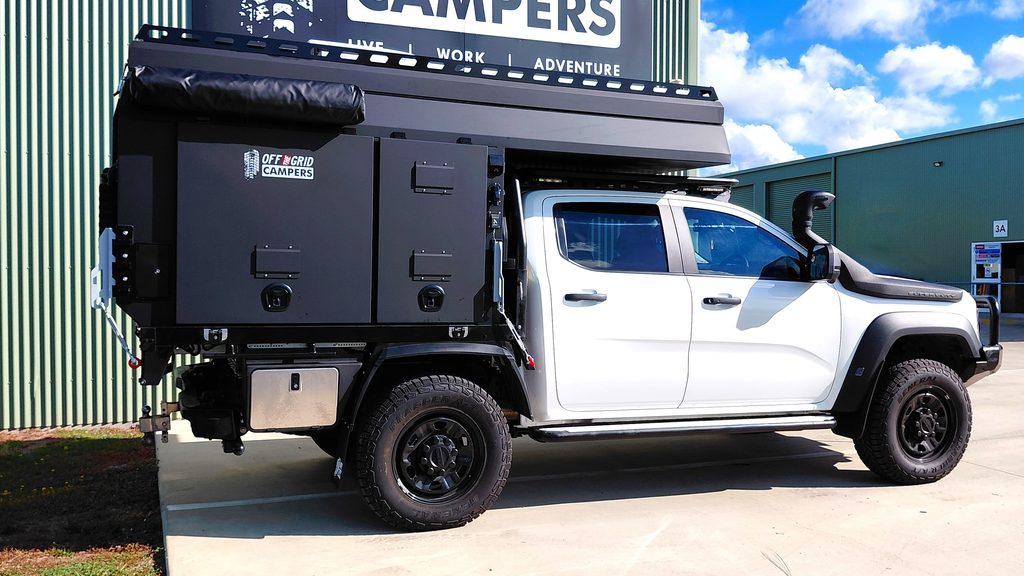
A slide-on camper is a self-contained unit built to sit directly on the tray of a Ute or light truck. It integrates your sleeping quarters, living space and onboard facilities into a single removable body.
Unlike a caravan, it requires no trailer or tow hitch. Instead, it anchors directly to the tray using load-rated tie-downs and under-tray mounting points, allowing your vehicle and camper to move as a single rig.
How Does a Slide-On Camper Work?
Once mounted and secured to a compatible tray, the camper functions as your mobile living space. Internal layouts and onboard equipment vary by manufacturer, ranging from minimal pop-top shelters to fully equipped off-grid setups.
Can You Remove a Slide-On Camper from Your Vehicle?
Yes. Most models feature built-in manual or electric support legs that allow you to raise or lower the unit. This lets you unmount and leave the camper set up at your campsite while keeping your vehicle free for local tracks and day trips.
Who Are Slide-On Campers Suitable For?
They can suit 4WD enthusiasts, long-distance travellers, couples, families, remote workers and retirees who want a self-contained touring setup. OTG Campers offers different Ute and truck configurations to accommodate varying vehicle and travel requirements. Learn more about OTG Campers.
Ute vs Truck Slide-On Campers
Your vehicle dictates your camper size. Utes and trucks vary significantly in tray dimensions, payload capacity, and interior space. The right choice depends on your rig and your living space requirements.
Ute Slide-On Options
- Dual-Cab Ute: Maximises passenger seating but provides a shorter tray.
- Extra-Cab Ute: Strikes a balance between cabin room and tray length.
- Single-Cab Ute: Delivers the longest tray space of the three.
Truck Slide-On Campers
Built for heavier vehicle platforms, truck campers require longer and wider trays. Their expanded footprint allows for larger floor plans, a King bed and greater storage capacity, making them ideal for extended outback touring.
Which Option Works for You?
Match your choice to your vehicle’s payload and your traveler count. Start by listing your required storage, sleeping layout, and facilities, then cross-reference those needs against your tray dimensions and GVM limits.
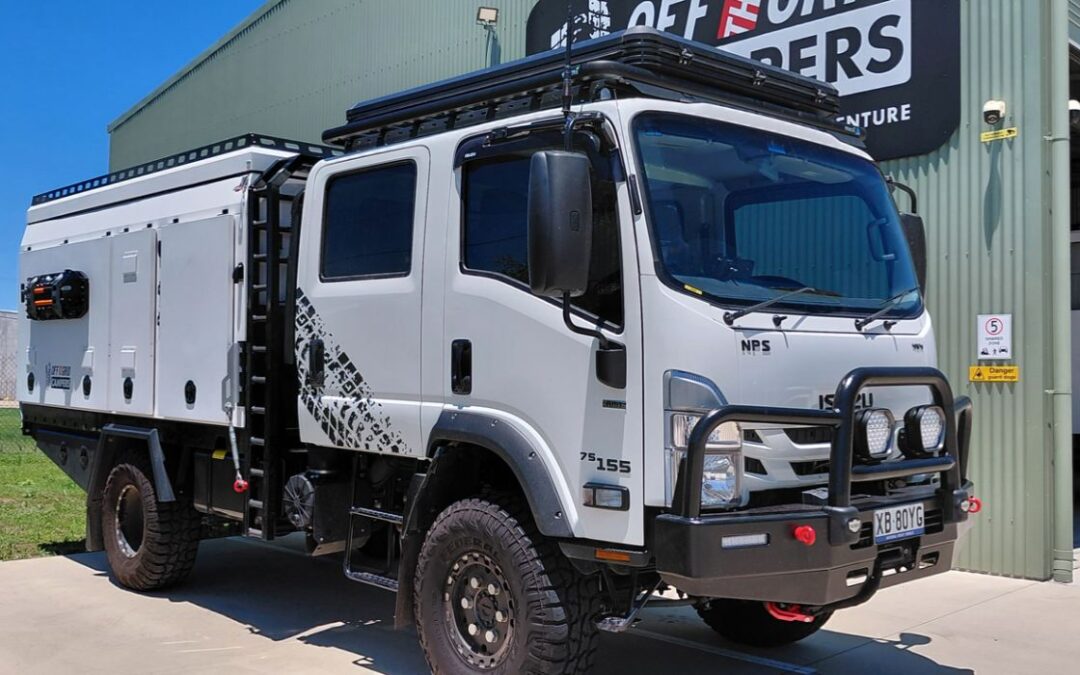
OTG Campers provides dedicated slide-on configurations for dual-cab, extra-cab and single-cab Utes, as well as dual-cab and single-cab truck platforms. Compare our dual-cab Ute campers, single-cab Ute campers, and truck camper range to find your ideal layout.
Matching a Camper to Your Vehicle
Before picking a model, ensure your vehicle can carry it safely. A camper might fit physically on your tray, but that does not guarantee your rig can handle the total touring weight.
Check Your Vehicle’s Payload and GVM
Payload is the total weight your vehicle can carry above its kerb weight. Gross Vehicle Mass (GVM) is the legal maximum weight of your vehicle when fully loaded.
Your available payload must cover:
- The slide-on camper weight
- Passengers, fuel, and fresh water
- Camping gear, tools, and luggage
- Accessories like bullbars, winches, and aftermarket trays
Always calculate your weight based on a fully loaded rig, not just the camper’s dry weight. A vehicle that appears to have sufficient capacity before loading may exceed its GVM once everything is fitted.
Measure Your Tray
Tray dimensions are just as critical as weight limits. OTG Campers lists specific minimum tray length and width requirements for every Ute and truck configuration to ensure a flush, secure fit without safe-handling issues or unsafe overhang.
| Configuration | Minimum tray length | Minimum width |
| Dual-cab Ute | 1,760 mm | 1,850 mm |
| Extra-cab Ute | 2,110 mm | 1,850 mm |
| Single-cab Ute | 2,510 mm | 1,850 mm |
Truck configurations have separate requirements. Check the OTG tray dimensions guide before planning.
Check Axle Ratings and Tie-Downs
GVM is only part of the equation. Your vehicle also has specific front and rear axle load limits. Poor weight distribution can overload a single axle, even if your total weight stays within legal GVM limits.
Your tray must also feature load-rated tie-down points and heavy-duty mounting hardware. On corrugated tracks and off-road terrain, constant movement and vibration put extreme stress on your anchor points.
Prepare Your Vehicle’s Electrical Setup
To charge the camper’s battery system while driving via an onboard DC/DC charger, your vehicle needs the correct wiring installed between the starter battery and the tray connection point.
Vehicle-side wiring is a customer responsibility. Confirm the exact cable gauge and plug requirements before installation and have the harness fitted by a qualified auto electrician.
For full vehicle compatibility and technical specifications, visit the OTG Campers information page.
4. What’s Inside a Modern Slide-On Camper?
A slide-on camper can include several facilities you’d usually associate with a larger caravan. The layout and inclusions vary by model, but here are the main features to consider.
Sleeping and Living Space
OTG ute campers feature a North-South Queen bed, while truck models offer a King bed. The pop-top design provides additional internal headroom, with seating areas, wrap-around sofas and a swing-away dinette creating space to relax or have a meal.
Kitchen and Cooking Facilities
Kitchen arrangements include an induction cooktop, travel oven and refrigerator, with storage for food and cooking equipment. Depending on the layout, you can also make use of external cooking arrangements when you prefer to prepare meals outside.
Bathroom and Ensuite Facilities
Available ensuite facilities include a shower, electric hot water and toilet storage. Having these amenities inside the camper means you have access to private bathroom facilities without relying entirely on campground amenities.
Heating, Cooling and Ventilation
OTG offers Dometic reverse-cycle air conditioning, diesel heating and internal fans. The pop-top roof also allows additional ventilation when the camper is set up.
Storage and Everyday Convenience
Internal cupboards, linen storage and external compartments provide room for clothing, food and touring equipment. LED lighting, USB outlets and 240V power points support everyday use.
You can see the different layouts and interior features in the OTG Campers Gallery.
5. Understanding Off-Grid Electrical Systems
How much electrical power will you need when camping away from powered sites? The answer depends on the appliances you plan to use, how often you use them and how much energy your system can generate and store.
What Does Off-Grid Power Actually Mean?
An off-grid system allows you to operate electrical appliances without connecting to mains power. However, your available energy is not unlimited. You need to balance daily consumption with the power generated and stored.
Batteries: How Much Storage Do You Need?
Battery capacity is measured in amp-hours (Ah). A higher Ah rating generally means more stored energy, but your requirements depend on your appliances. Running an air conditioner, for example, requires considerably more power than operating lights or charging small devices.
Solar Panels and DC/DC Charging
OTG campers use two main charging sources:
- Rooftop solar panels: Generate electricity during daylight hours to help recharge the batteries.
- Vehicle DC/DC charging: Uses power from the vehicle’s electrical system to charge the camper batteries while driving.
What Does an Inverter Do?
An inverter converts the battery’s DC electricity into 240V AC power. Inverters enable the operation of compatible 230V/240V appliances without a mains connection, provided the inverter and battery system can handle their power draw.
Understanding Victron Energy and eFUSIONBlue
OTG’s eFUSIONBlue system uses Victron electrical components for charging, power management and monitoring. OTG offers the Extreme 600 and Extreme 900 upgrades for Ute campers, and the Extreme 900 and Extreme 1200 packages for truck campers. These upgrades increase battery storage and inverter capacity for travellers with higher power requirements.
See the OTG Information Page for details about available electrical configurations and upgrades.
Off-Grid Amenities
Facilities require careful consideration if you plan to spend days away from established campsites.
Fresh Water
Freshwater capacity varies by model, so check the specifications for your chosen configuration. Your daily consumption will depend on the number of travellers, shower frequency and the time between refill points.
Hot Water
An onboard Truma electric hot water system feeds both the kitchen sink and the shower.
Ensuite
Ensuite configurations vary by model, featuring integrated shower curtains and dedicated private space to clean up off-road.
Toilets
Check the toilet arrangement of your chosen model. OTG includes a Thetford cassette toilet, with an OGO Nomad composting toilet available as an upgrade.
All-Electric Kitchen
OTG Campers uses electric cooking and hot water, with no installed gas appliances or internal gas connections. Running appliances off-grid relies on lithium battery banks, high-wattage solar, and Victron inverters.
Build and Off-Road Capability
Camper construction dictates overall weight, durability, and performance on remote tracks.
Aluminium Frame
OTG uses lightweight aluminium construction designed to handle the vibration and demands of rough terrain. The welded structure resists vibration and corrosion on corrugations, reducing the risk of cracking and water ingress associated with some fibreglass designs.
Weight Distribution
A low-profile design places the heavy mass directly over the vehicle axle. The compact footprint minimises side and rear overhang, helping manage weight distribution.
Dust Sealing
OTG’s optional All-Electric Assist package includes electric roof actuators, remote-controlled lift legs, central locking and an electric awning. These features make it easier to raise the roof, detach the camper and prepare the campsite.
Setup and Pack-Up
Electric lift legs, an automated pop-top roof, and an electric awning streamline camp setup. The remote-controlled actuators unmount the unit and open the living space within minutes.
Off-Road Performance
A tough camper shell forms only part of a capable rig. Off-road readiness depends equally on vehicle suspension, tyre pressures, correct load distribution, and driver skill.
Slide-On, Caravan, or Rooftop Tent?
A slide-on camper is not the only way to travel with accommodation. Caravans and rooftop tents offer different advantages, so the right choice depends on your vehicle and how you prefer to camp.
Slide-On Camper vs Caravan
Caravans provide large living spaces but require towing, restricting off-road maneuverability and reversing ease. A slide-on camper mounts directly onto your vehicle tray, leaving your tow hitch free for boats or work trailers. Once unmounted at camp, your vehicle stays free for day trips.
Slide-On Camper vs Rooftop Tent
Rooftop tents offer lightweight, low-cost sleeping quarters but lack internal living space, weather protection, and amenities. A slide-on camper provides a fully equipped mobile home with an indoor kitchen, ensuite, and locked storage, provided your vehicle has the required payload.
Quick Breakdown
| Consideration | Slide-on camper | Caravan | Rooftop tent |
| Towing | Not required | Required | Not required |
| Living facilities | Available within the camper | Available within the caravan | Usually limited |
| Storage | Internal and external options | Usually more storage | Limited |
| Vehicle use at camp | Camper can be detached | Tow vehicle can be used separately | Remains attached to vehicle |
Your budget, vehicle capacity, travel frequency and preferred destinations should guide the decision. For a closer comparison, read Rooftop Tent vs Slide-On Camper.
Essential Vehicle Upgrades for Slide-On Touring
Mounting a camper transforms your vehicle’s handling dynamics. Factory suspension and standard components rarely cope with continuous static tray loads and off-road corrugations.
Upgraded Suspension Systems
Replace factory leaf springs, coil springs, and dampers with constant-load heavy-duty alternatives. Match spring rates specifically to your camper’s wet weight to eliminate excessive body roll, sag, and bottoming out on uneven tracks.
Heavy-Duty Tyres
Fit All-Terrain or Mud-Terrain tyres with reinforced light-truck sidewalls (E-rating). Higher load indices ensure tyres safely manage heavy static tray loads at correct touring pressures without excessive heat buildup.
Structural Tray Upgrades
A heavy-duty alloy or steel tray is recommended to support the static and dynamic loads of a slide-on camper. Install a heavy-duty alloy or steel tray featuring integrated structural runners, under-tray toolbox mounts, and flush-mounted load-rated tie-down tracks.
Engineered GVM Upgrades
Consult an automotive engineer to evaluate legal payload capacity. An engineered GVM upgrade may be needed to accommodate the fully loaded vehicle.
Explore the full OTG slide-on camper range and contact our team to discuss a custom configuration for your vehicle.
Frequently Asked Questions
Will a slide-on camper overload my Ute?
It can. Calculate the camper’s real touring weight, including water, fuel, passengers, food, gear, accessories and the tray, then compare it with your vehicle’s payload, GVM and rear axle rating. A heavier, fully equipped slide-on often requires an engineered GVM upgrade.
What size tray do I need for an OTG slide-on camper?
OTG Ute campers need a 1,850 mm wide tray. Minimum internal tray length is 1,760 mm for a dual-cab, 2,110 mm for an extra-cab and 2,510 mm for a single-cab. Truck campers need a larger tray and separate specifications.
Can I remove the camper and leave it at camp?
Yes. Support legs lift the camper off the vehicle so you can drive away for day trips or local exploring. OTG offers manual legs as standard, with optional remote-controlled electric lift legs.
Do slide-on campers need registration and insurance?
Slide-on campers generally do not need separate registration because they are carried on the vehicle, not towed. You should still arrange suitable insurance for your camper. OTG recommends specialist RV insurance through CIL.
How much off-grid power do I need for air conditioning, cooking and hot water?
For limited use, a 3,000 W inverter can usually run two of the three loads at once. To run all three together, consider an OTG package with a 5,000 W inverter and sufficient battery capacity.
Is a slide-on camper better than a caravan or rooftop tent?
A slide-on camper is best for tow-free, self-contained travel with a real bed, storage, water and off-grid power. A caravan offers more space but requires towing. A rooftop tent is lighter and faster but provides only basic sleeping accommodation.